
The Two Links Coasts: Northern Ireland and the Southwest, Honestly Compared
Reading time: 2 minutes
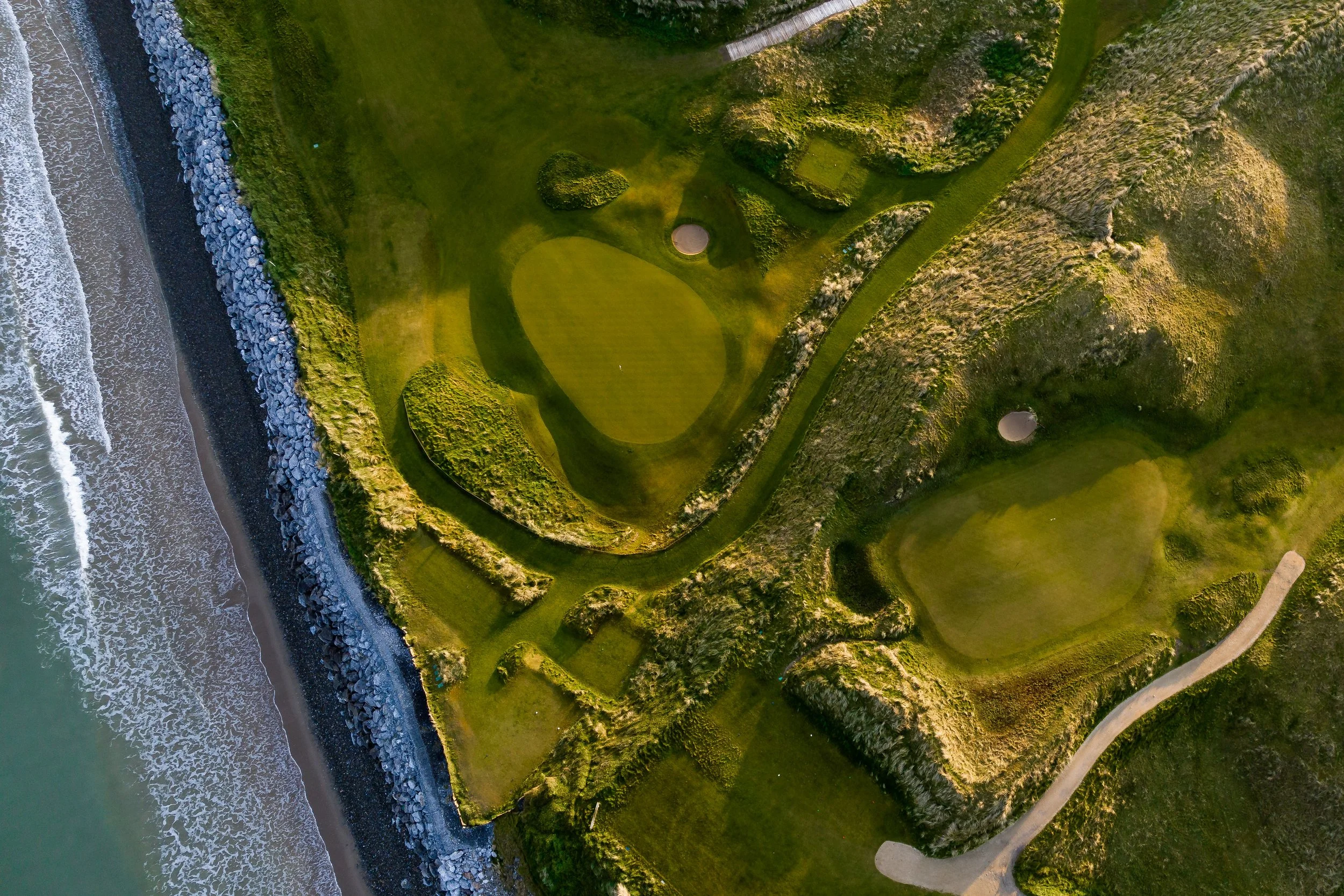
Ballybunion
In September 2027, the Ryder Cup will land at Adare Manor in County Limerick. For three days of competition, and a working week of build-up around it, the eyes of the golfing world will be on the southwest of Ireland. For the eighteen months on either side of that week, the booking sheets at every championship links course on the island will already be full.
Ireland is unusual in golf in that it has two genuinely world-class links coasts, separated by about three hundred miles of motorway. This is an honest piece, written by people who book all of these courses for a living, about how those two coasts actually compare — what each is, on its own terms, rather than what one is in the absence of the other.
Two Coasts, One Island
The northeast — the Antrim and Down coasts — gives us Royal Portrush and Royal County Down, plus the quieter giants of Portstewart, Castlerock, and Ardglass. The southwest — Kerry and Clare, with County Limerick now anchored by Adare — gives us Ballybunion, Tralee, Waterville, Lahinch, Dooks, and Doonbeg. Both coasts are Atlantic-facing. Both sit on the sandy soil that produced the original game. The wind, the dunes, the absence of trees, the firm-and-fast turf in summer — they share a vocabulary.
What they do not share is a personality. The North reads as compressed and dramatic: two championship courses within a ninety-minute drive, both with a long Open-and-amateur-championship pedigree, both photographed against mountains. The Southwest reads as expansive and varied: a stretch of championship and characterful links spread along two hundred miles of peninsular coastline, each with a distinct character and its own argument for inclusion. Choosing between them is like choosing between Scotland's Ayrshire coast and the Highlands. There is no wrong answer; there are different kinds of trip.
What the North Is
Royal County Down was founded on 23 March 1889, with Old Tom Morris brought over from St Andrews to lay out the additions that turned the nine-hole layout into a championship course; the full eighteen opened in July 1890. It sits inside the Murlough Nature Reserve along Dundrum Bay, framed by the Mountains of Mourne. The blind shots, the gorse, the lipped pot bunkers, and the fairways funnelling through the dunes toward Slieve Donard give it a character of its own.
Royal Portrush, on the Antrim coast, is the other half of the Northern Irish argument. The Dunluce Links was redesigned by Harry Colt in 1932, on a course the club had been playing in some form since 1888. Colt's routing — across two natural ridges, with the par-3 sixteenth ("Calamity") falling away into a chasm on the right side — has anchored two recent Open Championships: 2019 (Shane Lowry's home win) and 2025 (Scottie Scheffler, four strokes clear of Harris English). The North, distilled, is a tight itinerary built around two well-known championship courses with mountain-and-coast scenery.
What the Southwest Is
The Southwest's character is range. A serious week down here strings together five or six full-bodied rounds across two hundred miles of peninsular coastline, no two of them looking or playing the same. Ballybunion's cliff-line opening holes give way, an hour later in the trip, to MacKenzie's geometry at Lahinch and then, a day after that, to the back-nine cliff drama at Tralee and the end-of-the-road quiet of Waterville. The architecture spans Old Tom Morris in the 1890s through Arnold Palmer in the 1980s and Tom Fazio in the 2000s — most regions in world golf can claim one of those names; the Southwest can claim them all.
Around the golf, the Wild Atlantic Way connects every course on this list to the Ring of Kerry, the Cliffs of Moher, the Dingle Peninsula, and Killarney's lakes — a richer adjacent landscape than any other links coast in Ireland or Britain. The Southwest also tends to play softer in spring and harder in summer than the North, which sits in a slightly drier rain shadow.
How to Choose, in 2027 and After
Both coasts are championship trips. The North gives a tightly drawn itinerary built around two of the most-ranked courses in the world; the Southwest gives a longer, more varied week built across a deeper bench of strong rounds and a richer non-golf landscape. Neither is a stand-in for the other, and a serious golfer will eventually want to play both. The answer to "which coast" is really an answer to "which trip" — a focused two-or-three-course pilgrimage, or a stretched-out week through several distinct links and the Wild Atlantic Way that connects them.
A Kerry-and-Clare week in 2027 has the additional gravity of being walking distance, in golf-trip terms, from Adare during Ryder Cup week. Both are full trips. Pick the one that matches what you want from the week.
Argyle Links plans Northern Ireland, Southwest, and combined itineraries for groups visiting Ireland in 2027 and beyond. We hold tee times at Royal County Down, Royal Portrush, Ballybunion, Lahinch, Tralee, Waterville, Dooks, Doonbeg, and the rest of the courses in this series, and we coordinate accommodation, transfers, and a non-golfing partner programme to match. Start planning.